
A graphic novel play by Jennifer Haley

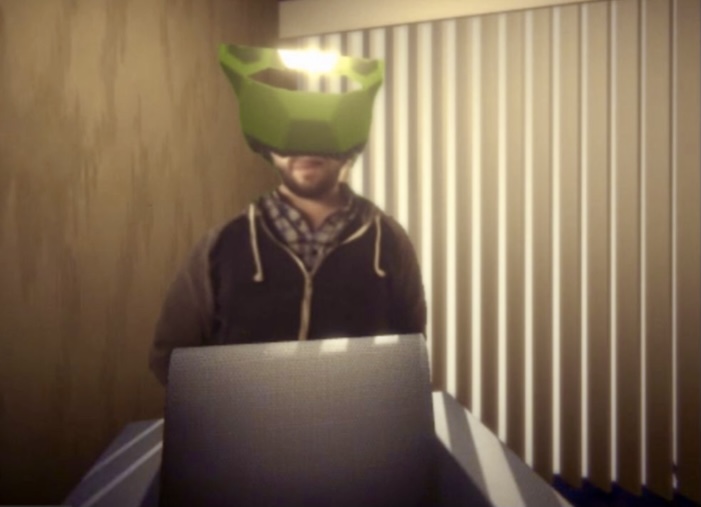
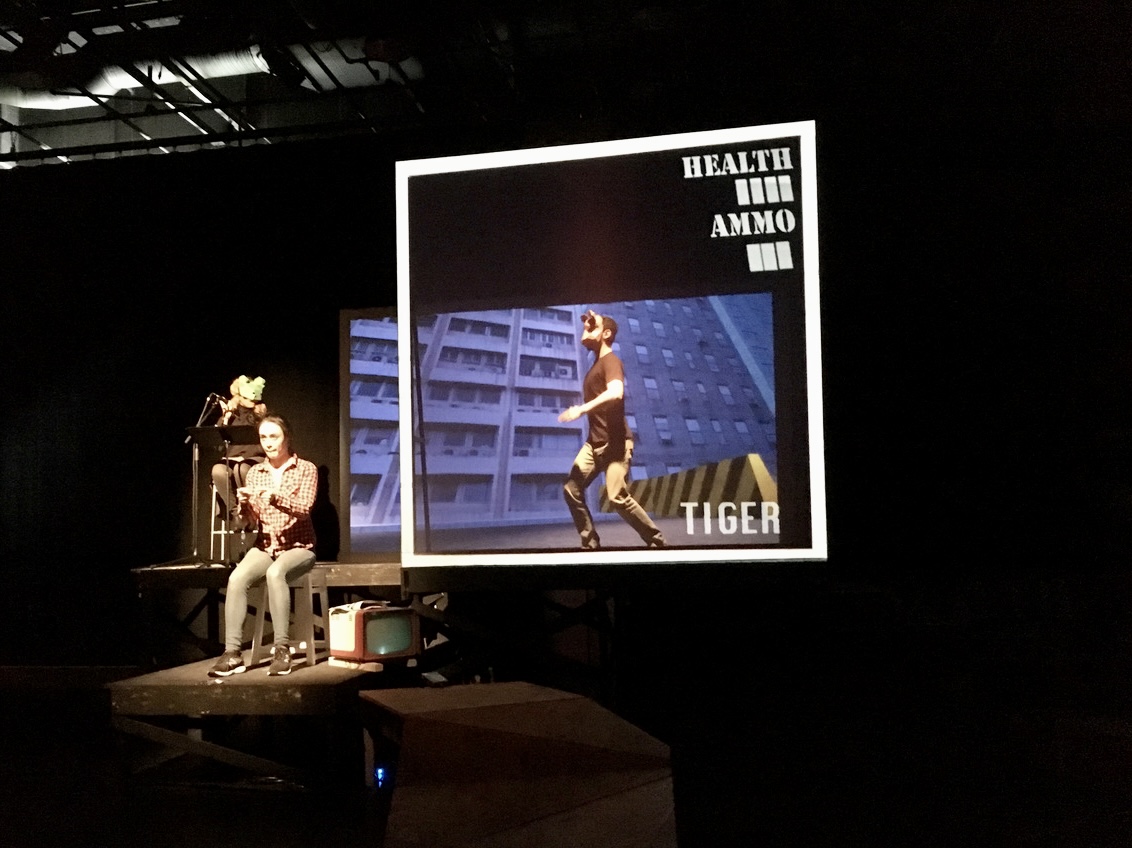
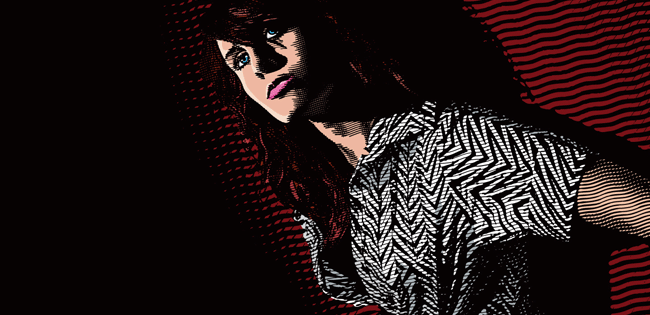
When Froggy spots her long lost lover in a bootleg video game, she embarks on a search that takes her from Los Angeles to Calico Ghost Town, where she finds herself in a dangerous intrigue with a shady production company and phantoms from her past. Stylistically inspired by graphic novels, this noir thriller unfolds in images and voiceover to a live soundtrack.

The Team

Jennifer Haley is a Los Angeles-based playwright whose recent work deals with technology and virtual reality. Her play Neighborhood 3: Requisition of Doom, about suburban teenagers addicted to a horror video game, was presented at the Humana Festival of New Plays and has been produced around the country. Matt M. Morrow is the new Associate Artistic Director at City Theater in Pittsburgh. He splits his time between New York City and Pittsburgh, focusing on developing new plays that are highly theatrical and push conventional boundaries. Nathan Leigh is a prolific composer, songwriter, and producer. Mixing folk, punk, classical, electronica, and world elements, Nathan draws from a wide array of influences to create unique musical atmospheres and soundscapes.

Word From The Artists

Jennifer: When I sat down to write Froggy, all I knew is I wanted to write a play "in the style of a graphic novel." However, I had no idea what that meant. I holed up in my barn studio at the Millay Colony with several graphic novels, opened my copy of In Design, a publishing program, and started writing a cartoon-looking piece using voiceovers and images. I was also influenced by the noir aspect of many graphic novels; the brooding quality, deeply psychological journey of the characters and chiarascuro illustrations influenced my story. Freed from the conventions of dialogue-driven narrative and single-scene action, I was able to free associate, and found myself developing a narrative of psychological connectivity. All kinds of themes rose to the surface during Froggy's search for her ex-lover - addiction, consumerism, warfare - in a way I sensed was uniquely American. However, after completing the first draft, I had no idea how it would function as a theater piece. Enter Matt...

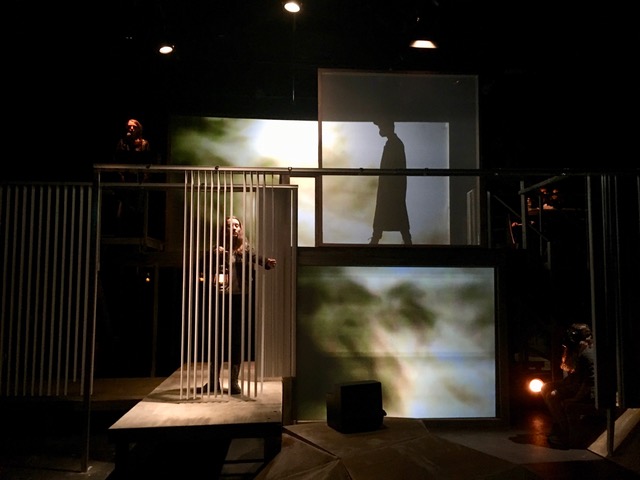
Matt: When I first read Froggy I was immediately sucked in, connecting to it on a purely visceral level. The challenge as a director was clear: how could I conceptualize this story in a way that allows the audience to experience the alchemy of Froggy's journey through her mind, her history, and the literal adventure she embarks on to find her lost love. Ultimately, to find a way to represent the show in space for developmental purposes, I conceived three worlds within the larger Noir world of the play: Froggy's Fantasy World, her Memory World and the parallel universe of the Videogame World. Each of these worlds are represented inside the panels on the page; everything outside the panels is in the real time of the Noir World. This concept allowed us to look at narrative in a more cogent way, and help develop musical and visual styles that are integral to any story told by way of a graphic noir novel. What excites me most about Froggy is that it is brand-spanking new; it's experimental in form, but it's core story is one we can all recognize as a part of our own lives as Americans and lovers.

Nathan: My challenge when developing music for this script was to find a sound that was both contemporary and traditional. I started with a few key melodies, then experimented with them in different genres. Like Matt developing different spacial worlds for the play, I developed different aural worlds. There is the Noir Theme, which is modern and brooding, the Video Game Theme, which includes sounds from 8-bit video games, and the Memory Music, which features a traditional fiddle. The Flashy Intro required a sound akin to the opening credits of a television show from the 1970s, so I used the music of Henry Mancini as an inspiration. The melodies come back through all of these themes and genres, unifying the overall soundtrack.

Next Up

We now seek to build a visual language for Froggy using innovative projection techniques. We started experimenting at the P73 Residency at Yale and anticipate another workshop at The Banff Centre to continue developing the look and feel of the show, as well as the technical requirements involved with creating a projection-driven mise en scène.

The Process

Jul 2008Jennifer writes Froggy at the Millay Colony of the Arts.
Jul 2010Page 73 Productions provides a workshop for Froggy at their Summer Residency at Yale. Matt Morrow comes on board to direct.
Apr 2011Froggy is developed at the Sundance Theatre Lab, held at The Banff Centre in Banff, Canada. Carey Perloff, Artistic Director of American Conservatory Theater and Kelly Robinson, Theatre Director of The Banff Centre participate on a panel of professionals giving feedback on the workshop presentation.
Oct 2011Kelly Robinson invites Froggy back to The Banff Centre for a workshop to develop the music. Nathan Leigh comes on board and writes the entire soundtrack during this eight day residency. We record his in The Centre's state-of-the-art recording studios.
Dec 2011Carey Perloff invites Froggy to American Conservatory Theater to refine the music with her company actors and MFA students.
Jun 2012A prospective workshop is scheduled at The Banff Centre to develop the visual language of the play using current theatrical projection techniques.

Special Thanks

Special Thanks to Liz Jones and Asher Richelli at P73 for first developing Froggy, and Philip Himberg and Christopher Hibma at Sundance, Kelly Robinson at The Banff Centre and Carey Perloff at A.C.T. for their continuing support.